
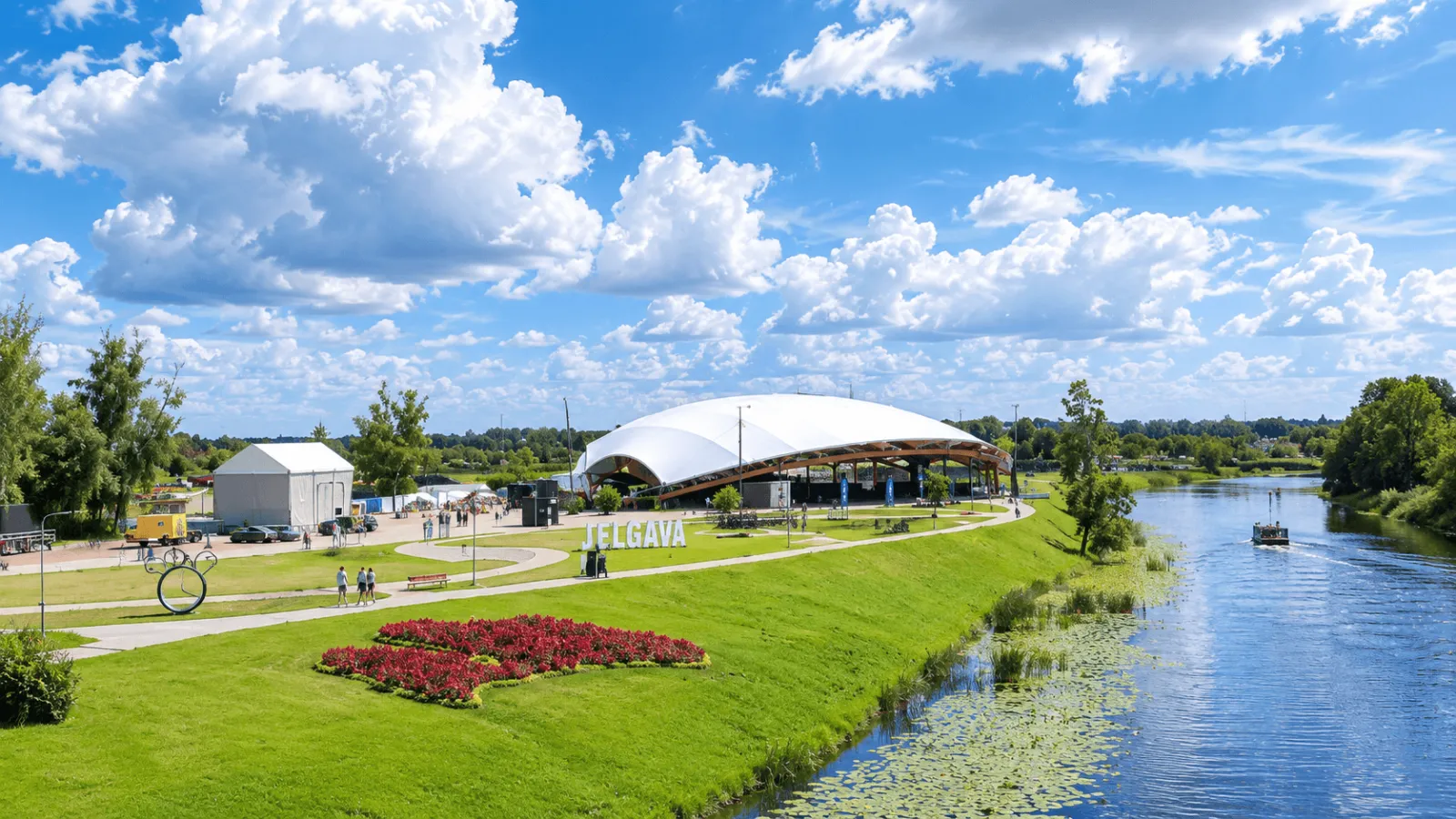
Jelgava makes a different kind of day trip from Riga. Its riverbanks, broad streets and large palace create an open setting, with enough history for a full visit without the density of the capital's Old Town. The most useful approach is to connect the main sights with a walk along the water.
The city lies southwest of Riga in Zemgale. Rail and road connections make it accessible from the capital, but check the current timetable and your return journey before choosing a departure. Allow for the walk between the station and the places you want to visit.
Understand the city before looking for an old town
Jelgava was historically known as Mitau and became a centre of the Duchy of Courland and Semigallia. Its ducal buildings and educational history are important parts of the story. However, heavy destruction during the Second World War changed the city profoundly.
Expect surviving and reconstructed landmarks within a largely later cityscape, rather than an intact medieval centre. That context helps explain why the palace and church tower stand out so strongly. Looking at historical displays before walking the streets can make the changes easier to recognise.
Start with Jelgava Palace
Jelgava Palace was built in the eighteenth century as a residence for the dukes of Courland and Semigallia. It is associated with architect Bartolomeo Rastrelli and is one of Latvia's principal Baroque landmarks.
Today the building is home to Latvia University of Life Sciences and Technologies, known as LBTU. It is an active university setting as well as a historic site. Check which exhibitions and spaces are open to visitors instead of assuming the entire building can be toured as a furnished royal residence.
The palace museum explains the earlier castle and the construction and later history of the palace. The ducal burial vaults are another possible visit, subject to their current opening arrangements. They deserve time if the history of the Kettler and Biron dynasties interests you.
See the Holy Trinity Church Tower
The Holy Trinity Church Tower is a surviving part of a church destroyed in 1944. Following restoration, the tower reopened to visitors in 2010. It now provides a way to explore local history and look across the city.
The tower should not be confused with a fully surviving church or with one of Jelgava's other cathedrals. Its significance comes partly from what remains and what was lost. The displays and the view help place the city's wartime destruction and rebuilding in a physical setting.
Check access arrangements if stairs or heights are a concern. Opening hours, exhibition access and special closures should be confirmed for the day of your visit, particularly when planning around a short train connection.
Continue to the water and Pasta Island
The Lielupe and Driksa shape central Jelgava. Riverside paths and bridges connect viewpoints that are enjoyable without a packed museum schedule. A slow walk also gives you space to see the palace from more than one angle.
Pasta Island, or Pasta sala, is a recreation and events area between the waterways. It can be a convenient stop for a walk or a break, while festivals can give it a much busier atmosphere. Check the events programme if an uninterrupted park visit is what you want.
Palace Island, Pilssala, is a separate place. Its observation area is associated with birds, riverside meadows and grazing horses. If you include that walk, follow the marked access rules and keep a respectful distance from animals.
Leave space for a museum and a meal
Academia Petrina houses the Ģederts Eliass Jelgava History and Art Museum. It offers another perspective on the city's educational and cultural history, and can make a useful indoor stop when the weather is poor.
For food, look for a cafe or restaurant that suits the route and the time you expect to eat. Menus and opening days change, so verify a venue rather than relying on an old list of local favourites. Traditional Latvian food and international options can both form part of an ordinary day in a university city.
Plan for the season
Jelgava is associated with ice and sand sculpture events, but their dates and ticket arrangements need to be checked for the particular edition. An event weekend may affect accommodation, crowds and access around the islands.
In warmer weather, allow more of the day for the riverbanks. In winter, exposed paths can feel cold and may be slippery. A manageable plan is one or two indoor visits, a riverside walk and time for lunch, with a clear return route. That is enough to appreciate Jelgava without turning the day into a race between landmarks.