
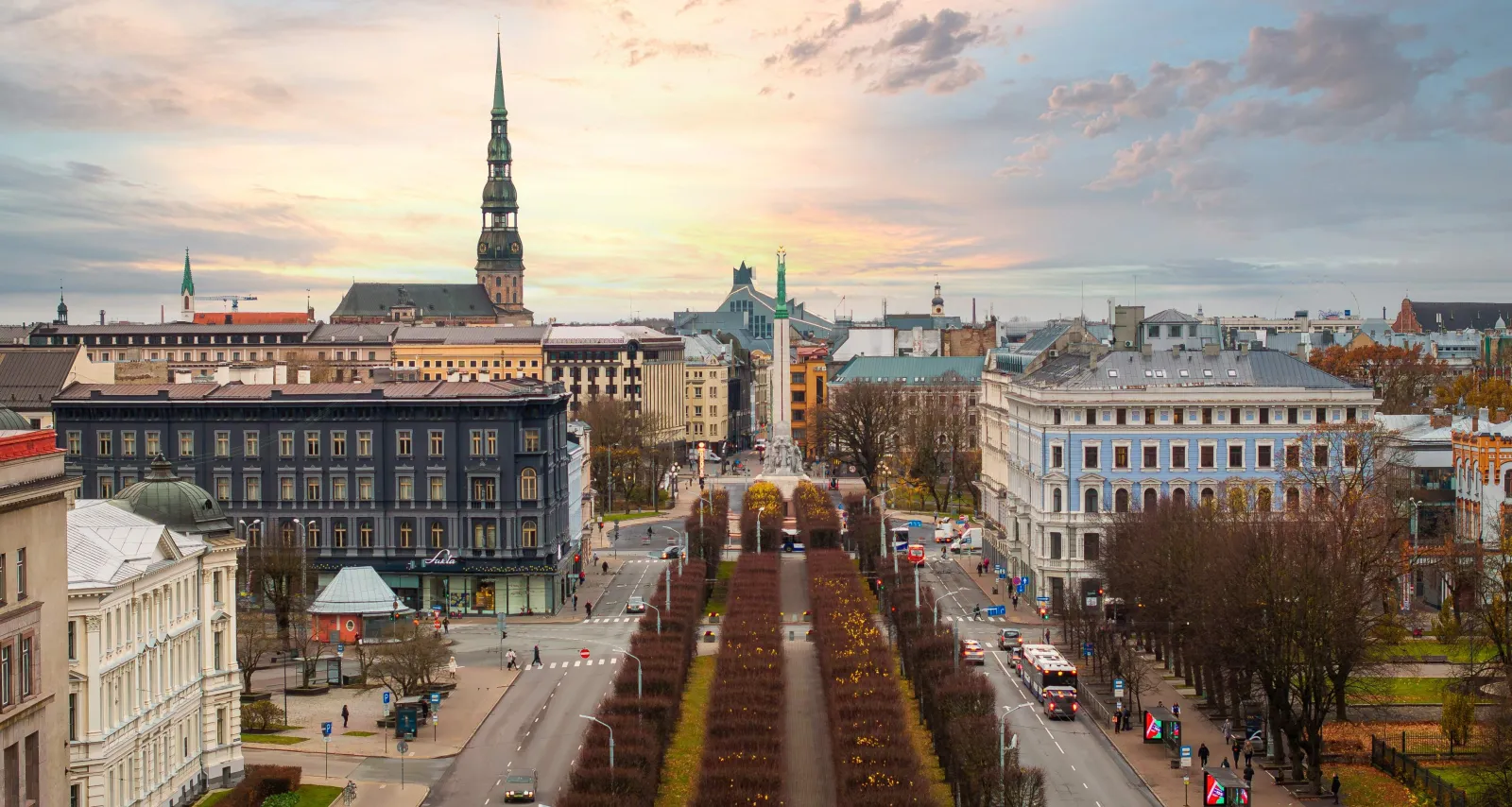
A useful first walk through Riga takes you from the Daugava riverfront through the Old Town and into the parks beyond it. Continue a little further and the scale changes: narrow streets give way to boulevards and apartment buildings with sculpted faces and elaborate windows.
That variety is a good reason to leave some time unplanned. Latvia's capital has enough museums and landmarks to fill several days, but it is also enjoyable between the named attractions. Group your stops by area and give yourself time to sit down for a meal.
Explore the Old Town on foot
Vecrīga, Riga's Old Town, is the familiar starting point. Its squares and streets bring together merchant history, churches and buildings from several periods. Riga Cathedral, St Peter's Church and the House of the Black Heads are useful landmarks for orienting yourself.
Many buildings have been restored or reconstructed, so their present appearance does not always mean every element has survived unchanged since the Middle Ages. The House of the Black Heads, in particular, is best understood through its history as well as its striking frontage.
St Peter's tower provides a view across the roofs and river when open. Check visiting arrangements and visibility before paying for a tower visit. Cobblestones and uneven surfaces can affect walking comfort, so suitable footwear helps even on a short city break.
Walk beyond the medieval centre
The canal and surrounding parks provide a natural transition from the Old Town into the later city. This is also where a wider understanding of Riga's UNESCO-listed historic centre begins: the protected urban story extends beyond the medieval streets.
For Art Nouveau in Riga, head towards Alberta iela and nearby Elizabetes iela. Look for contrasts between extravagant sculpture and more restrained geometric facades. The district developed during the city's growth around the turn of the twentieth century.
The Riga Art Nouveau Centre offers an interior perspective, while a street walk lets you compare buildings in their neighbourhood setting. These are occupied urban streets, so enjoy facades and entrances from public space unless a building explicitly welcomes visitors.
Spend time at Central Market
Riga Central Market sits close to the main rail and bus stations. Its large pavilions incorporate structures originally associated with German airship hangars. The market opened in 1930 and remains a place for ordinary shopping as well as a visitor stop.
Explore the produce, bread, dairy and fish stalls according to what is operating that day. Check a seller's opening arrangements if you are looking for a particular product; the surrounding area and individual businesses do not all follow one schedule.
Ask before photographing people at close range. If buying food to carry onwards, think about refrigeration and travel rules as well as what looks appealing on the counter.
What to eat
Traditional Latvian food often includes dark rye bread, potatoes, dairy products, fish and preserved or seasonal ingredients. Grey peas with pork and onions are a familiar hearty dish. Smoked fish and rye bread can make a simple introduction, while contemporary restaurants interpret local produce in different ways.
Sklandrausis, a small rye-crust tart with carrot and potato filling, comes from Kurzeme but can sometimes be found in Riga. Availability varies. Ask about ingredients if you have dietary restrictions: a vegetable-looking dish may include meat fat, and sauces or pastries can contain dairy and eggs.
Choose an area that fits your trip
The Old Town puts many sights within walking distance, though streets with bars can be noisy at night. The wider centre offers another range of accommodation, restaurants and transport connections. Check the exact address rather than assuming that every listing described as central has the same location.
Āgenskalns, across the Daugava, can suit a visit that includes neighbourhood markets and wooden architecture. Mežaparks is a different setting again, with more space and greenery but a longer journey to central sights. Compare your daily route before booking.
Transport, weather and time outside the city
Riga has buses, trams and trolleybuses. Confirm the current ticket and validation rules with the operator, and check the airport connection for your arrival time. Journey length depends on the route and traffic, so a fixed twenty-minute estimate is not a reliable plan for every trip.
Summer brings long evenings; winter has shorter days and possible snow or ice. Rainwear can be useful across seasons. Check current event dates rather than assuming a named festival takes place on the same schedule every year.
If you have more time, investigate a day in Jūrmala, the Gauja valley around Sigulda or a visit to Rundāle Palace. Each needs its own transport and opening-hour check. It is often better to enjoy one well-planned outing than to spend a short Riga break continuously travelling between places.