Archive and update: this article concerns the parliamentary vote of 30 October 2025. The English edition was reviewed on 25 October 2026 to distinguish that vote from the later legal and parliamentary developments.
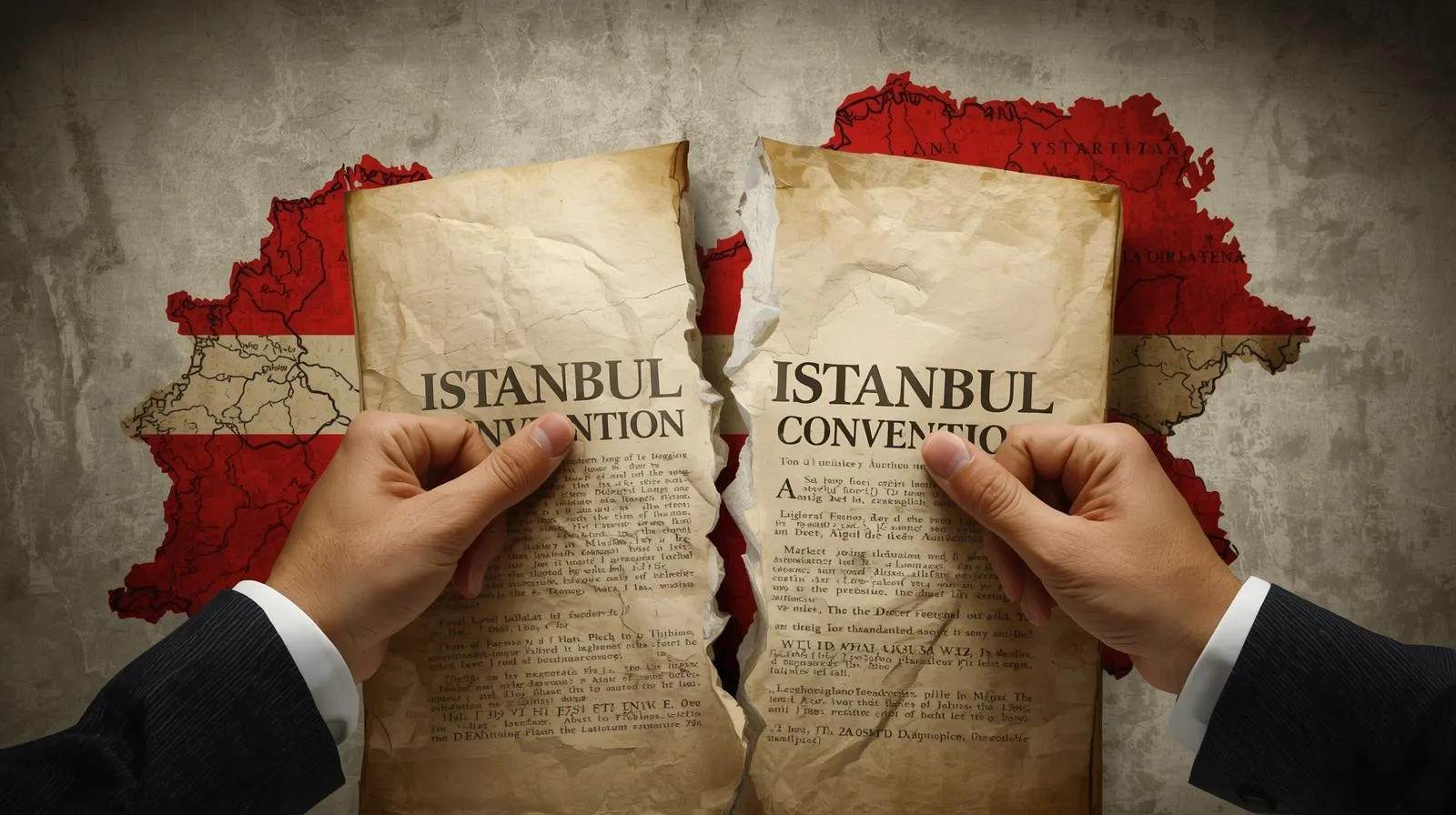
On 30 October 2025, Latvia's parliament, the Saeima, adopted legislation intended to withdraw the country from the Istanbul Convention. The decision followed a prolonged debate and exposed disagreements within the governing coalition. It did not, by itself, establish that Latvia had already completed withdrawal from the treaty.
That distinction matters when reading reports published immediately after the vote. The law still faced the president's consideration, and the process subsequently returned to parliament. Describing the October decision as a completed exit leaves out what happened in the following days.
What the Istanbul Convention covers
The Istanbul Convention is the Council of Europe Convention on preventing and combating violence against women and domestic violence. It provides a framework concerning prevention, protection and support for victims, prosecution and coordinated policy.
The Council of Europe and the European Union are different organisations. The convention is a Council of Europe treaty, although the EU has also acceded within its areas of competence. Participation by an individual state and the EU's obligations should therefore not be treated as the same legal arrangement.
Latvia signed the convention in May 2016. Its instrument of ratification was deposited with the Council of Europe on 10 January 2024, and the convention entered into force for Latvia on 1 May 2024. The original parliamentary approval preceded that deposit; these are separate stages in joining an international treaty.
Why the vote became a political dispute
The withdrawal initiative developed during 2025. Opponents of continued participation challenged the convention's treatment of gender and argued that national legislation could provide the necessary protections. Supporters argued for maintaining the international framework and its monitoring arrangements.
The Union of Greens and Farmers, a partner in the government led at that time by Prime Minister Evika Siliņa, supported withdrawal alongside opposition parties. The prime minister opposed leaving. The vote therefore showed a disagreement within the governing alliance as well as the wider division in parliament.
Public demonstrations accompanied the debate. Thousands of people gathered in Riga in opposition to withdrawal before the final parliamentary vote. The protests and subsequent petition activity made the issue visible well beyond the parliamentary chamber.
The president returned the law
On 3 November 2025, President Edgars Rinkēvičs returned the law to the Saeima for reconsideration. His intervention raised questions about the justification for withdrawal, legislative quality and the consistency of Latvia's international commitments.
The presidential response changed the next step. Reports written while his decision was still pending no longer described the full situation once the law had been returned. The question became how parliament would handle reconsideration rather than when a completed exit would take effect.
Parliament postponed reconsideration
On 5 November 2025, the Saeima sent the draft back to its Foreign Affairs Committee for reconsideration. Parliament set 1 November 2026 as the deadline for submitting proposals. That date was a procedural deadline, not an automatic withdrawal date.
The Saeima's explanation said that reconsideration follows the provisions used for a third reading and focuses on the president's objections and related proposals. This is why the October vote, the presidential intervention and the later committee procedure need to be understood as distinct events.
Later developments and the position of this article
The Venice Commission examined the withdrawal proposal in an opinion adopted in December 2025. Its discussion included concerns about the justification for withdrawal and the potential relationship between national protections, international obligations and the convention's monitoring system.
In September 2026, the Council of Europe published GREVIO's baseline evaluation of Latvia. The accompanying statement welcomed legislative and policy progress while identifying areas where further action was needed. The evaluation concerns implementation of the convention and should not be confused with a parliamentary decision on withdrawal.
At the review date of this English article, the Council of Europe's Latvia page continued to list the country's ratification and entry into force. The October 2025 vote is therefore presented here as an important historical decision followed by reconsideration, not as evidence of a completed departure.
Source record: Saeima Press Service, 5 November 2025; Council of Europe treaty and Latvia country records; Venice Commission opinion CDL-AD(2025)053; Council of Europe GREVIO announcement, 15 September 2026.